
Meet the Lab
CURRENT MEMBERS

Dr. Heather Mathewson
Dr. Mathewson and her dog Evie. More information about Dr. Mathewson available under About tab and in the link to her CV.
If you are interested in joining our lab, I only accept graduate students for which I have funding to support their stipend and research. When those positions arise I will post a link here to the Texas A&M Natural Resources Job Board.
If you are an undergraduate student seeking out research or volunteer opportunities, I encourage you to contact my lab manager, Zach Bellows, or any of the graduate students.
Graduate Students
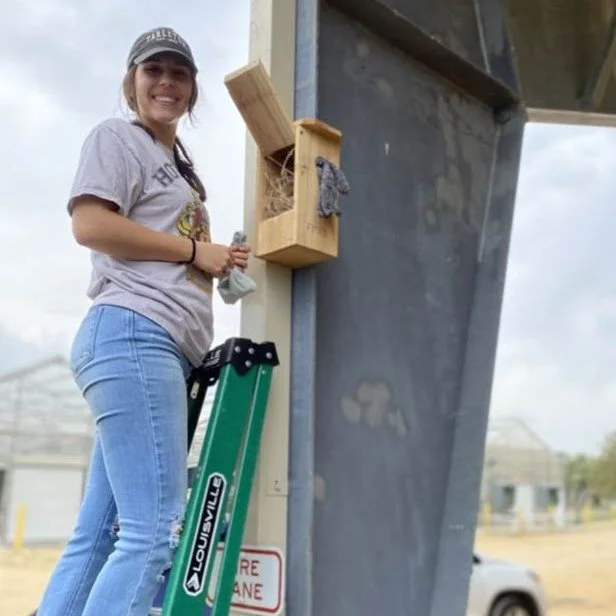
Lindsey Willingham
I'm a PhD student whose research is investigating how extreme temperatures influence songbird behavior and reproduction. I'm a part of a large collaboration that was started out of North Dakota State University by PI Dr. Britt Heidinger and funded by NSF. We have study sites in North Dakota, Kentucky, Oklahoma and here in Stephenville, Texas to create a latitudinal temperature gradient for researching the underlying mechanisms of Bergmann's rule using house sparrows (Passer domesticus). There are many possible mechanisms being explored on this project for explaining body size differences, but I am specifically looking at how parental behavior during the nestling period varies with temperature across our sites and how this might influence nestling body size. Additionally, I am utilizing eggs that resulted in hatching failure from these same house sparrow populations to investigate how environmental factors like temperature, humidity, and precipitation may influence embryo survivability. With my research studies, I am largely interested in how these birds are coping with the extreme Texas heat, especially during such physiologically demanding periods like breeding season. Once finishing graduate school, I would like to stay in academia. I am striving to become a professor with my own small research lab. I'm mainly interested in avian research, but I enjoy a little bit of everything and hope to have a research lab with broad interests.
Chiesl, L. C. 2023. Parental provisioning in house sparrows along a temperature gradient. MS Thesis, Tarleton State University, Stephenville, Texas, USA.
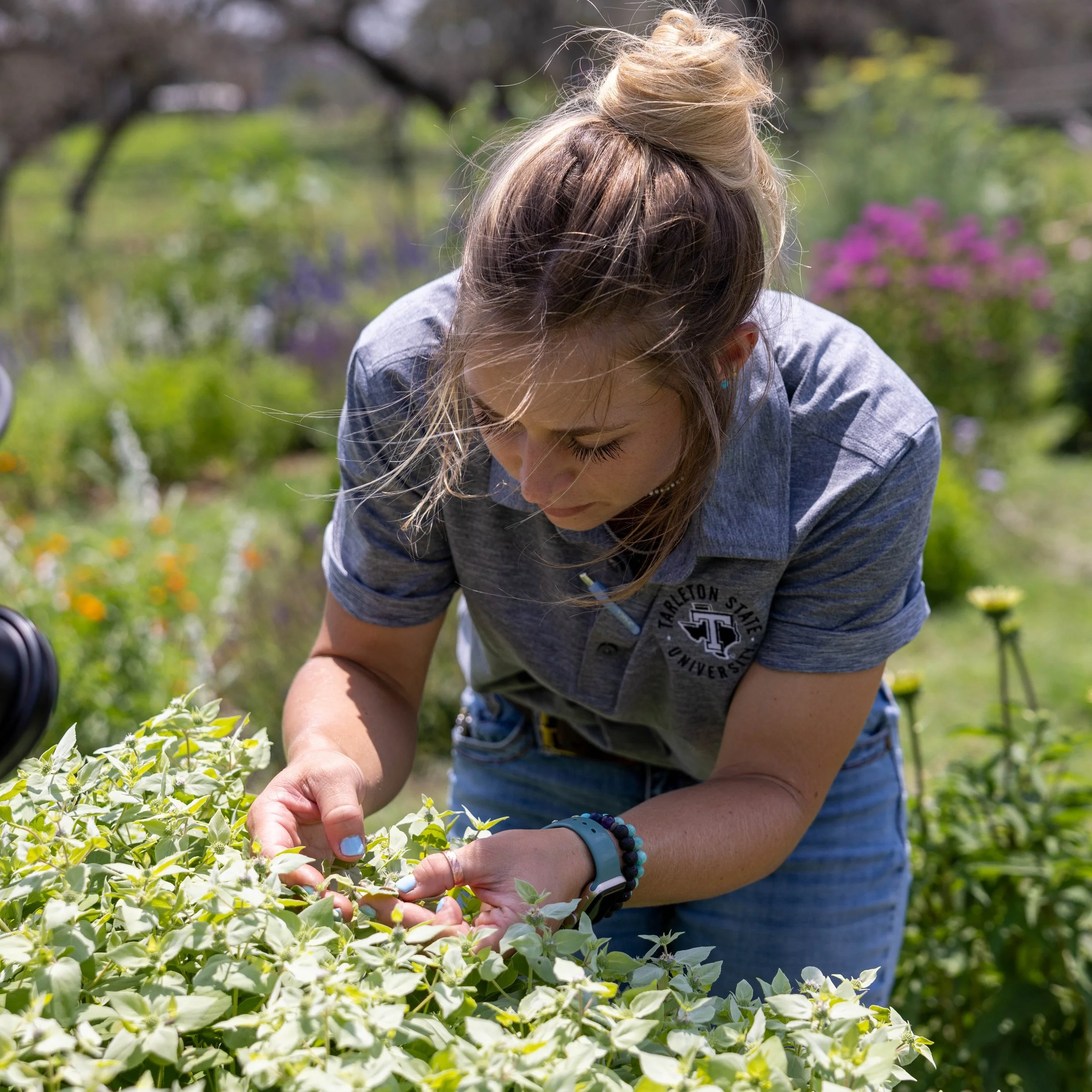
Addison Singleton
I am a PhD graduate student whose research explores plant-pollinator interactions in the context of anthropogenic disturbances. I'm especially interested in native plant-pollinator interactions, caterpillar-host interactions, and invertebrate natural history. The intricacies of the natural world continue to encourage my personal and academic pursuits. I find nothing more fulfilling than exploring the different species with whom we share the planet. Co-Chair Dr. Adam Mitchell.
Singleton, A. L. 2023. Understanding pollinator preference and resource use in drought tolerant landscape perennials in north-central Texas. MS Thesis, Tarleton State University, Stephenville, Texas, USA.
Ricky Garibay
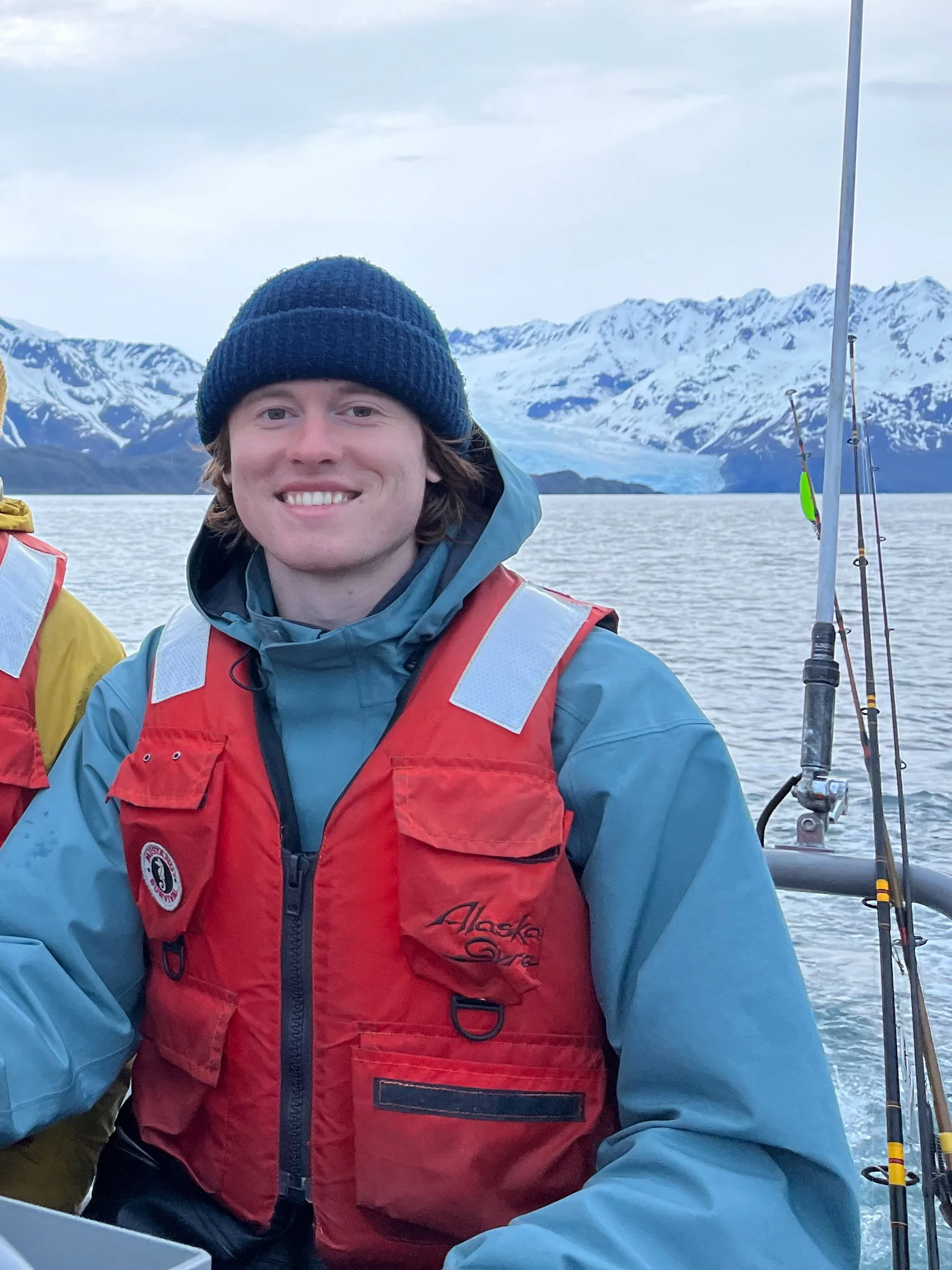
As an outdoorsman, wildlife biologist, and graduate researcher, I have always remained true to my core values of compassion, commitment, and tradition while following the stewardship and management of wildlife. Growing up hunting and ranching, I saw firsthand what happens if species are not managed, like feral pigs. Those experiences made me want to become more involved in active management, which led me to study wildlife and natural resources.
My current research project, “Feral Pig Activity Patterns in Palo Pinto Mountains State Park” is based in Palo Pinto Mountains State Park near Strawn, Texas. It investigates the abundance, habitat use, and interspecific interactions of feral pigs, white-tailed deer, and coyotes. Using game camera surveys, we aim to provide insights into the ecological impacts of invasive feral pigs on native ecosystems and their interactions with other vital species. Our results will help park managers understand species activity over time, aiding in future management decisions.
Mack Hughes
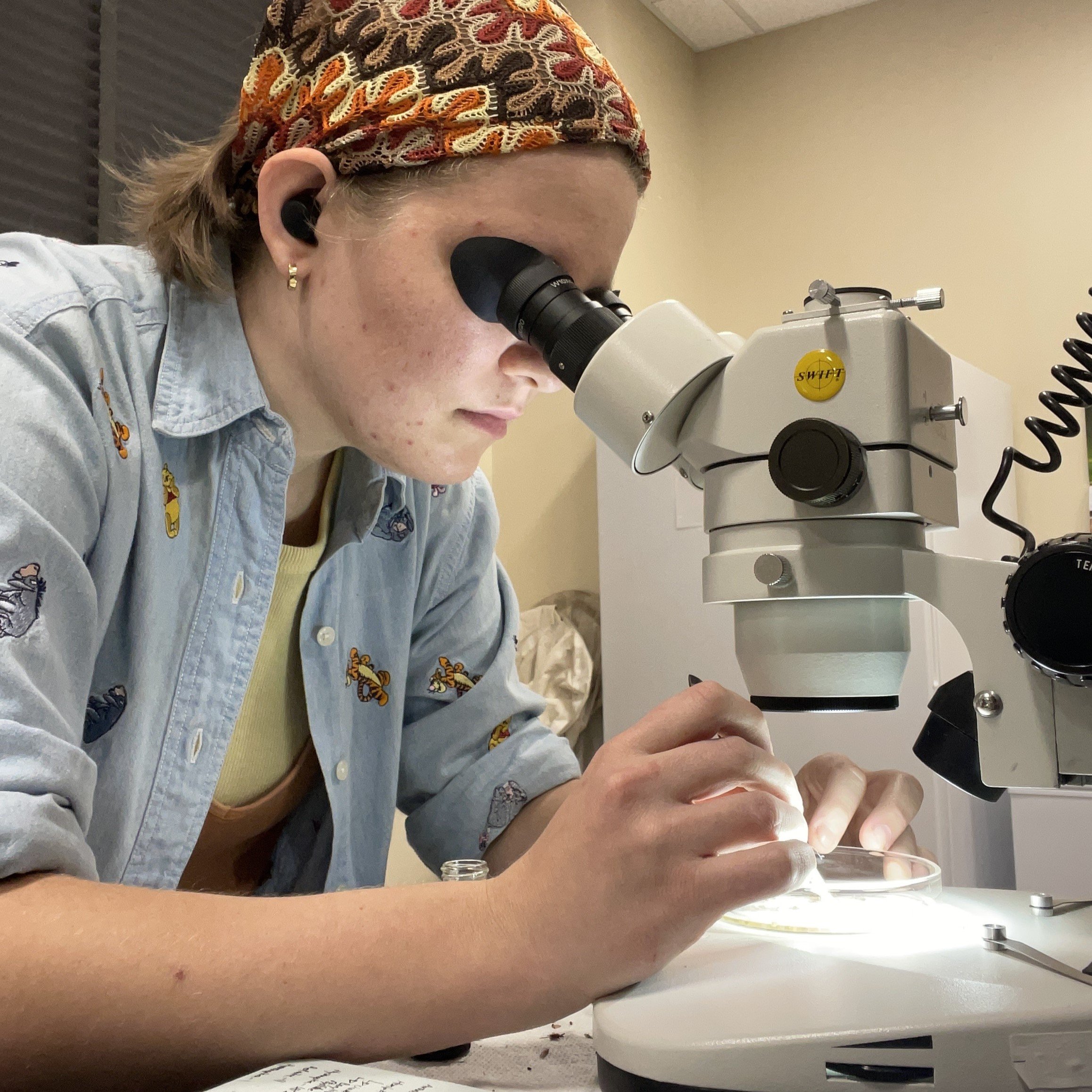
Mack is an ecologist with a background in marine science. He completed his undergraduate studies at the University of Oregon and his master’s at the University of Alaska Fairbanks, majoring in marine biology at both institutions. His research background ranges from underwater roving reef fish surveys in Indonesia, hiking through streams and forests in Washington to monitor salmon and collect data on their nests, to remote Alaskan research cruises to collect data on nearshore marine ecosystems. Mack’s research experience has been adventurous and full of challenges, which he enjoys. He is using his knowledge in ecology and field research experience to make a switch to studying landbirds. For his dissertation, Mack will be working with Dr. Heather Mathewson and collaborating with Sadie Ulman at Kenai Fjords National Park in Alaska to repeat a landbird inventory project that was last done in 2005. This project aims to understand how landbird communities, distribution, occurrence, habitat, and habitat associations have changed over the last 21 years within the park. In his free time, Mack enjoys climbing, backpacking, birding (for fun), and spending time with his partner and their two cats.
Ty Cosper
I joined the Mathewson Lab in Fall 2020 as an undergraduate, beginning with a Henslow’s Sparrow research project in Paris, Tx. My role soon expanded to include vegetation measurements, bird surveys, arthropod sampling, and camera data management across multiple projects. In 2021, I led an undergraduate project initiated by Molly Koeck examining the effects of bison grazing on arthropod and vegetation communities at Caprock Canyons State Park, continuing through 2022. From 2021–2024, I worked as a field technician on the Turkey Peak Mitigation Project, conducting vegetation surveys and avian point counts. I also assisted with Northern Bobwhite monitoring, telemetry, translocation, and trapping on private ranches (2021–2022). In Summer 2024, I joined the House Sparrow Project, gaining experience collecting blood, fecal, and oral samples from nestlings and participating in translocation egg swaps.
Beyond research, I was active in the Tarleton State University Student Chapter of The Wildlife Society, serving as Risk Management Officer, Vice President, and President. During this time, I participated in numerous East Foundation deer captures, turkey captures, quail captures at the Rolling Plains Quail Research Foundation, TPWD dove banding, trash clean-ups, spotlight surveys, and youth outreach events. I presented both oral and poster presentations at The Wildlife Society and Texas Chapter of TWS, a poster at Texas Society for Range Management, and competed on the Tarleton Plant Identification Team. Through my master’s and PhD programs, I have remained active in the chapter, serving as a mentor and graduate student advisor to support undergraduate members. In addition, I teach youth, college students, and adults on how to use telemetry and a net-canon in wildlife management. Since 2023 I have been point of contact for a first timer duck hunt hosted by Delta Waterfowl for college students at Tarleton State University, where we teach about hunting safety, waterfowl ID, and what to do with game after taking it.
I began my graduate research in Fall 2024 while completing my undergraduate degree, focusing on the risks erosion control products pose to protected species and other wildlife through a funded TxDOT grant. My thesis centered on arachnid conservation, particularly tarantulas and vinegaroons and the threats they face from erosion control blankets, and included development of a Texas range map for the giant vinegaroon using citizen science records and historical data. I also contributed to a Texas Comptroller grant evaluating the distribution and conservation status of the variable cuckoo bumblebee and American bumblebee in Texas using novel environmental DNA monitoring techniques.
I completed my master’s degree in August 2025 and immediately began my PhD in the Mathewson Lab. For my dissertation, I am taking a non-traditional, multi-focused approach. My projects include: (1) using community science to evaluate Greater Roadrunner distribution across urbanization gradients and assess potential resource use in developed landscapes, (2) modeling vegetation distribution maps for bees using data from the Variable Cuckoo Bumblebee Project, and (3) furthering the practices of telemetry on fossorial species. Alongside these primary directions, I continue research on the risks erosion control products pose to wildlife and further investigations into vinegaroon ecology and conservation in Texas.

Grace Soechting
My name is Grace Soechting, and I am pursuing graduate research under Dr. Heather Mathewson in collaboration with the Fossil Rim Wildlife Center. My research focuses on giraffe feeding behavior in captivity, with an emphasis on how management strategies influence welfare. Specifically, I am investigating activity budgets of adult giraffes at FRWC by conducting focal observations to establish baseline patterns of behavior. This work will provide one of the first detailed behavioral baselines for giraffes in a large, pasture-based environment, where animals have access to expansive space, social groups, and both natural and supplemental food sources. A key component of this study is examining the role of visitor-provided feedings as a potential form of foraging opportunity.
In addition, I am evaluating how different foraging opportunities affect feeding duration and the occurrence of oral stereotypies. By comparing behaviors across approaches, I aim to identify which methods most effectively encourage natural foraging behaviors and reduce abnormal behaviors. The ultimate goal of this project is to generate practical, evidence-based recommendations that caretakers can use to enhance animal welfare while aligning management practices more closely with giraffes’ natural ecology.
As a Deaf wildlife biologist, I bring a unique perspective to the field of wildlife research and am passionate about promoting accessibility, representation, and inclusion within STEM and conservation. Beyond my graduate work, I plan to apply my skills in animal behavior to both captive management programs and field-based conservation initiatives while continuing to advocate for greater accessibility in science.
The Wildlife Society, Wildlife Vocalizations, Grace discusses challenges as a deaf person. In 2024, Grace received a scholarship to attend The Wildlife Society annual conference from National Association of Wildlife and Fisheries Programs.
Ryan Ament
Hello, I’m Ryan Ament and I'm working on the Bombus environmental DNA (eDNA) project in collaboration with Dr. Adam Mitchell. Historically, Bombus variabilis (Variable cuckoo bumble bee) was present throughout Texas — however, due to it's elusive nature and difficulty to ID without specialist skills, it's current status is unknown. To aid in this knowledge gap, we are looking at the use of floral vegetation as a potential environmental medium for eDNA to assess the distribution of various bumble bee species across Texas, including B. variabilis and it's hosts B. pensylvanivus (American bumble bee) and B. sonorus (Sonoran bumble bee). When I’m not working, you can usually find me crouched in the grass trying to get a good picture of a bug, working on a new art project, or trying out a new recipe.
Madeline Kuehler
Hi, my name is Madeline Kuehler. I graduated from Tarleton in December 2025 with a Bachelor of Science in wildlife sustainability and ecosystem science and a Bachelor of Science in biology. I am now pursuing a master's degree under Dr. Mathewson working on graduate research with house sparrows. I hope to gain more knowledge and experience as I pursue my master's degree through this research, class work, and teaching opportunities. My goals are to obtain a PhD and find a career teaching as a professor and conducting conservation research in my free time.
Cameron Starnes
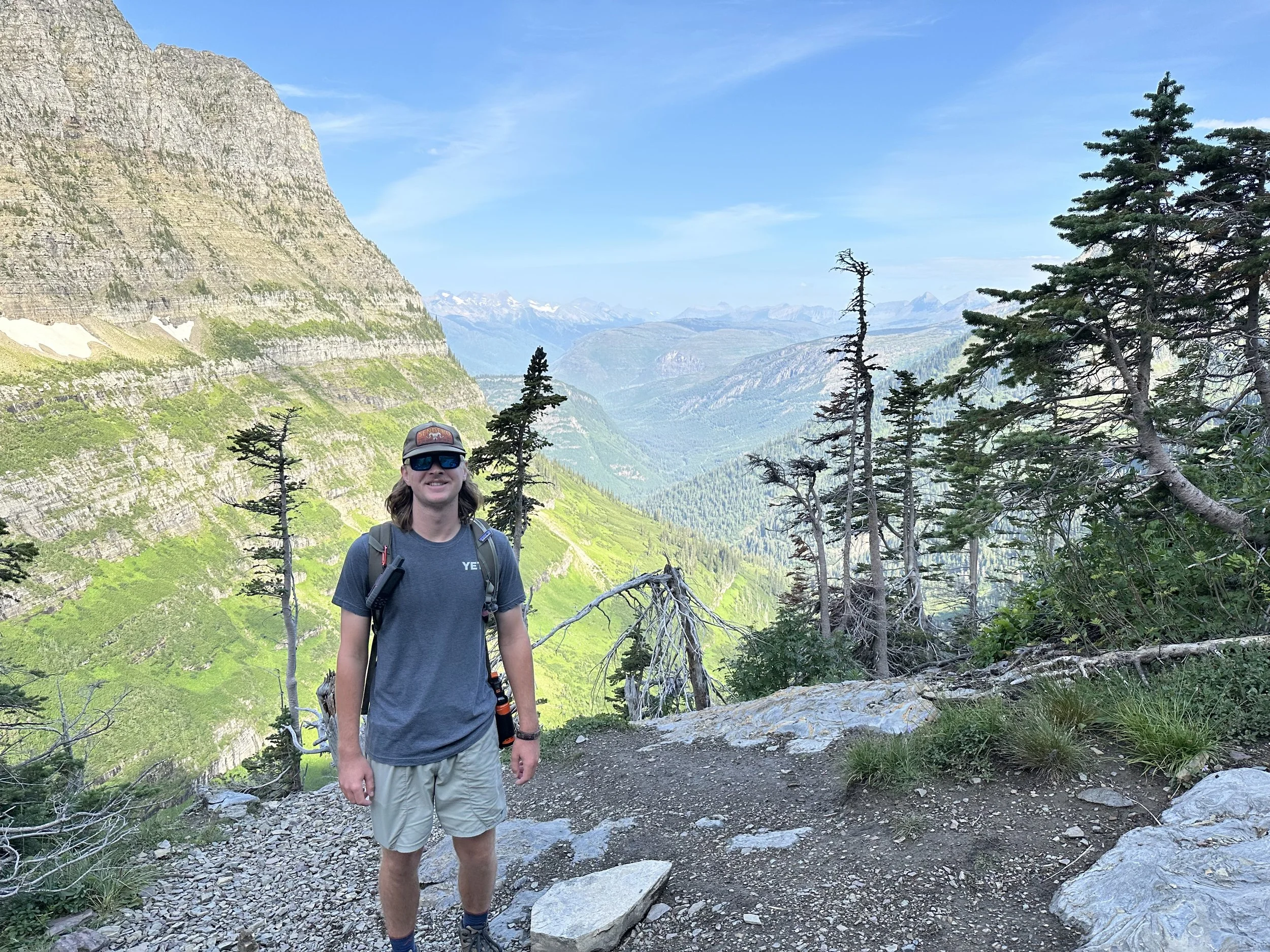
I am a master's student on the Turkey Peak Mitigation Project. The project is located at Palo Pinto Mountains State Park in Strawn, Texas and focuses on the removal of Ashe juniper and re-seeding of native grasses. With these restoration efforts, we hope to increase streamflow through Palo Pinto Creek and into Palo Pinto Creek Reservoir, which will then lead to the expansion of Palo Pinto Creek Reservoir to supply more water for the residents of Palo Pinto County.
Along with vegetation surveys, we also conduct waterfowl surveys, avian point count surveys, and wintering grassland bird surveys at the study site. We also conduct year-round camera trapping across the study area, as well as monitor erosion of Palo Pinto Creek through yearly stream monitoring photos. I am evaluating how removal of Ashe juniper along the riparian corridors influences avian biodiversity.

Undergraduate Students
Hannah Pepper-Atkinson
Hi! My name is Hannah Pepper Atkinson. I am an undergraduate field technician and researcher in the Mathewson and Mitchell labs. I work under the Turkey Peak mitigation and the Bumblebee eDNA projects. Currently, my research focuses on predicting habitat for bumblebees in Texas based on floral availability and seasonality. I have also worked on projects centered on woody encroachment and minimalizing soil disturbance, including my own research investigating using silver bluestem as a catalyst in restoring juniper encroached grasslands. Additionally, I am an officer of Tarleton Student Chapter of The Wildlife Society, serving as President and plant identification coach.
Gaven Sanders

Gracie Triplett
My name is Gracie Triplett, I am an undergraduate researcher in Dr. Mathewson’s lab currently working under the House Sparrow Project. My specific job is to work in Dr. Srinivasan’s chemistry lab and process fecal, arthropod, and egg samples for microplastics. The research that I am working on presenting is comparing collected macroplastics from the house sparrow’s nests to the microplastics found in the processed samples. After this, we plan to further this by using Fourier-transform infrared mass spectrometry and begin to assess what these plastics are made of so we can pinpoint where they come from. I also have helped with the Matagorda Bay Project under Dr. Adam Mitchell sampling invertebrates using pitfall traps as well as sampling in the various bays near Matagorda for vegetation, pelagic and benthic samples as well as different depth water samples. My future career and education plans consist of attending graduate school in marine science studies and working towards a career in marine biology. My goal is to work in coral habitat restoration or work with marine mammals.
Hello, my name is Gaven Sanders. I am an undergraduate field technician and researcher in Dr. Mathewson’s lab. I am a part of the Turkey Peak Mitigation Project, where I currently assist with conducting surveys, collecting game trail footage, and entering data. I am also involved in undergraduate research that is currently focusing on activity change of mesopredators with feral pig presence in riparian corridors in north-central Texas. Additionally, I serve as an officer of Tarleton’s student chapter of The Wildlife Society as Vice President where I also participate as a member of the chapter’s quiz bowl, plant ID, and fundraising team.
Paige Elliott
Hello! My name is Paige Elliott! I am currently working as an undergraduate researcher on the Turkey Peak Mitigation project with the Mathewson Research lab under Dr. Heather Mathewson and Cameron Starnes. We currently take data on waterfowl, songbirds, raptors, streams, woody and herbaceous vegetation. The methods we use to collect this data are game camera capture, point-count surveys, 25m - 50m line transects for vegetation along ephemeral and intermittent streams, and waterfowl surveys.
Research Lab Manager
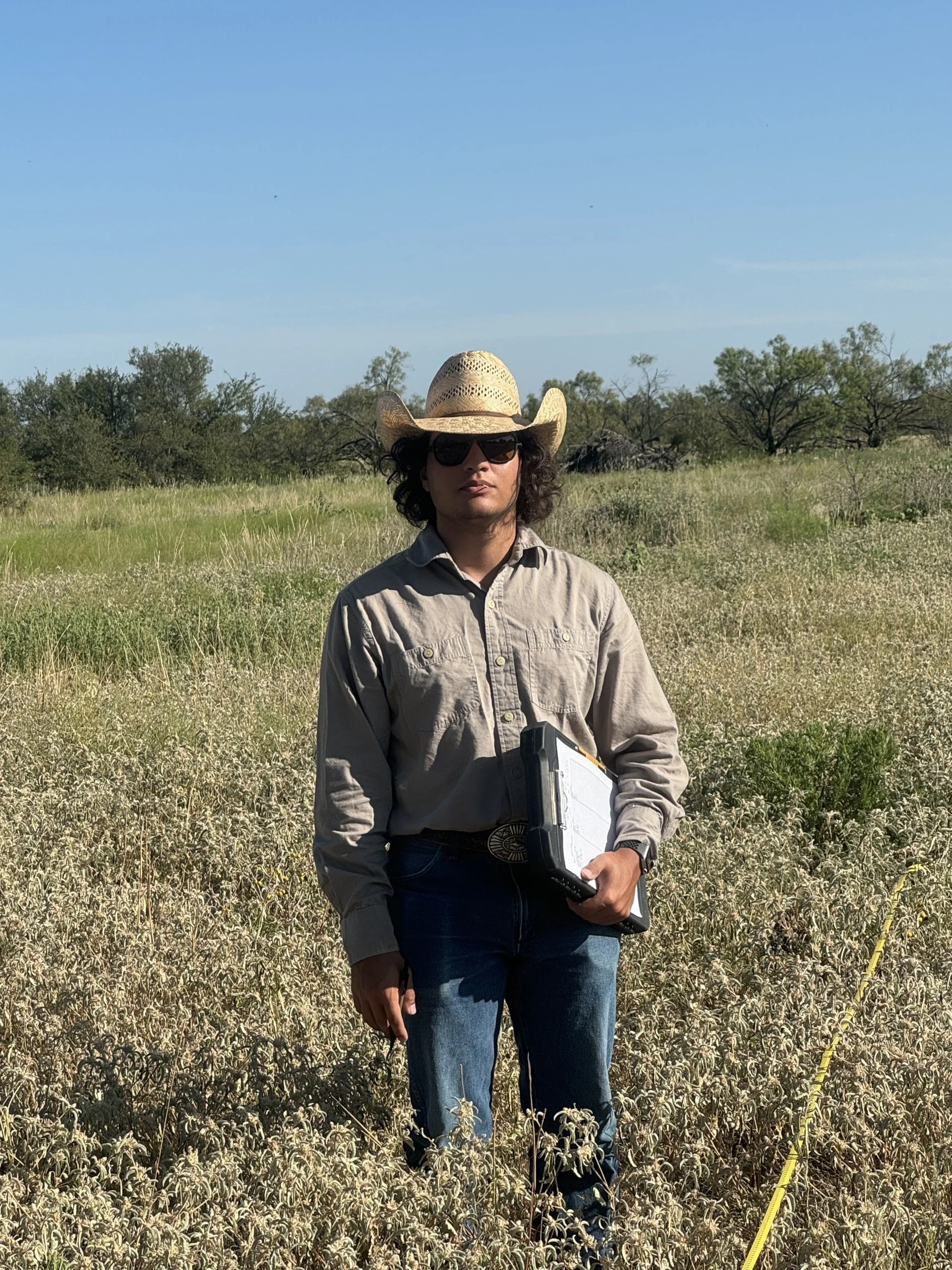
Zach Bellows
My name is Zach Bellows and I am the lab manager for Dr. Mathewson. I received my bachelors degree in Wildlife Sustainability and Ecosystem Science with a concentration in Natural Resource Ecology from Tarleton State University in May of 2023. For my undergraduate research, I studied the use of water sources by waterfowl at the Palo Pinto Mountains State Park with Dr. Mathewson. I completed my Masters degree with Dr. Mathewson in August of 2025. My thesis was a part of an ongoing project located in Palo Pinto and Stephens County, TX called the Turkey Peak Mitigation Project. I studied riparian vegetation responses to the removal of heavily encroached Ashe juniper (Juniperus ashei) monocultures in a riparian landscape. This project is located at the Palo Pinto Mountains State Park which is about 100 miles west of the Dallas-Fort Worth metroplex. I would like to continue pursuing jobs in grassland, woodland, and watershed restoration and management in North-central Texas.